About the play
Summer, 1994. Four filmmakers sketch the next thirty years of family cinema on a stack of napkins. None of them thinks to keep the napkins.
In the summer of 1994, four filmmakers — John Lasseter, Andrew Stanton, Pete Docter, and Joe Ranft — sat down for lunch at the Hidden City Café in Point Richmond, California. They sketched ideas on napkins. Four of those ideas became A Bug's Life, Monsters Inc., Finding Nemo, and WALL-E.
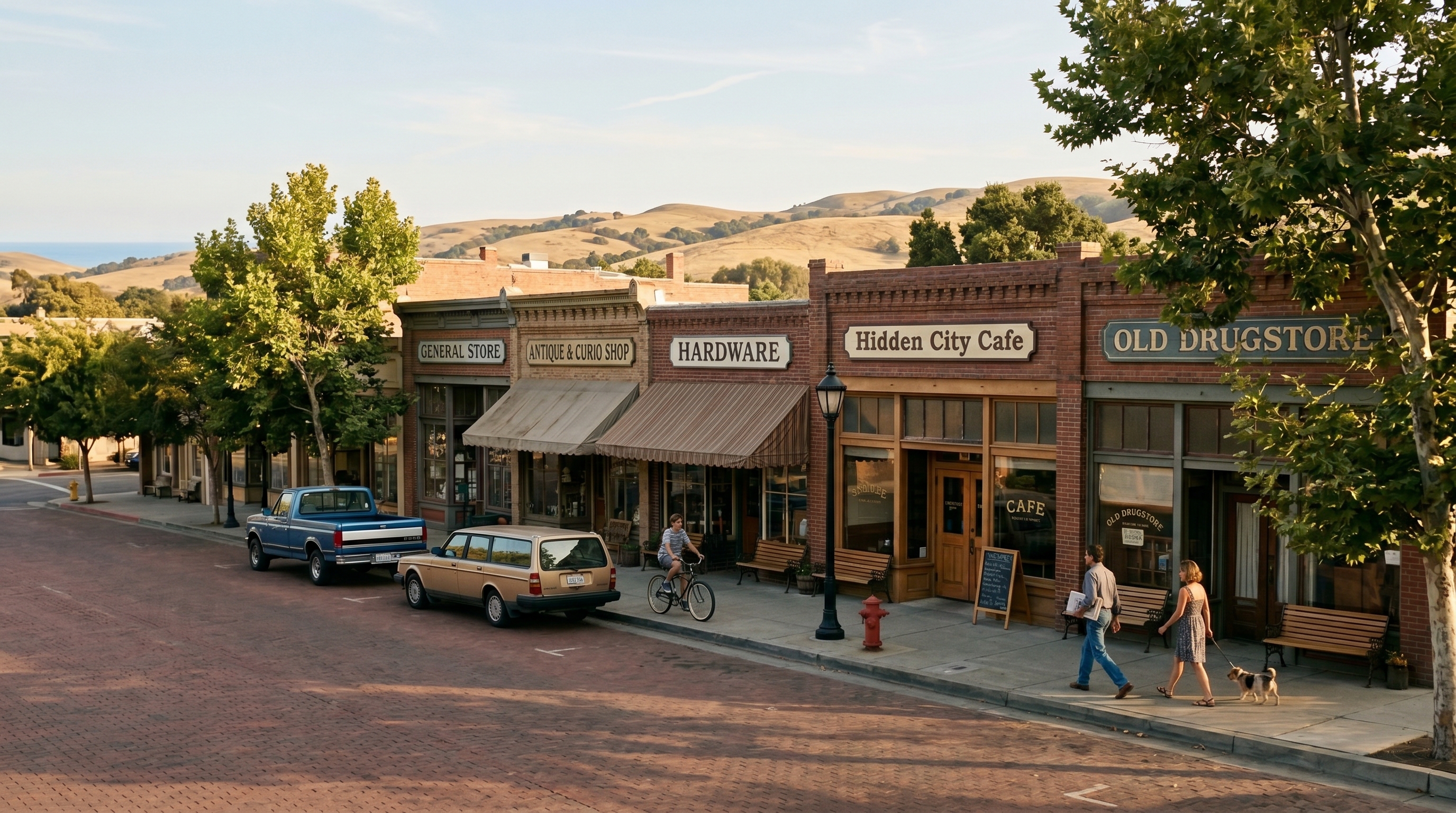
Hidden City Café, Point Richmond
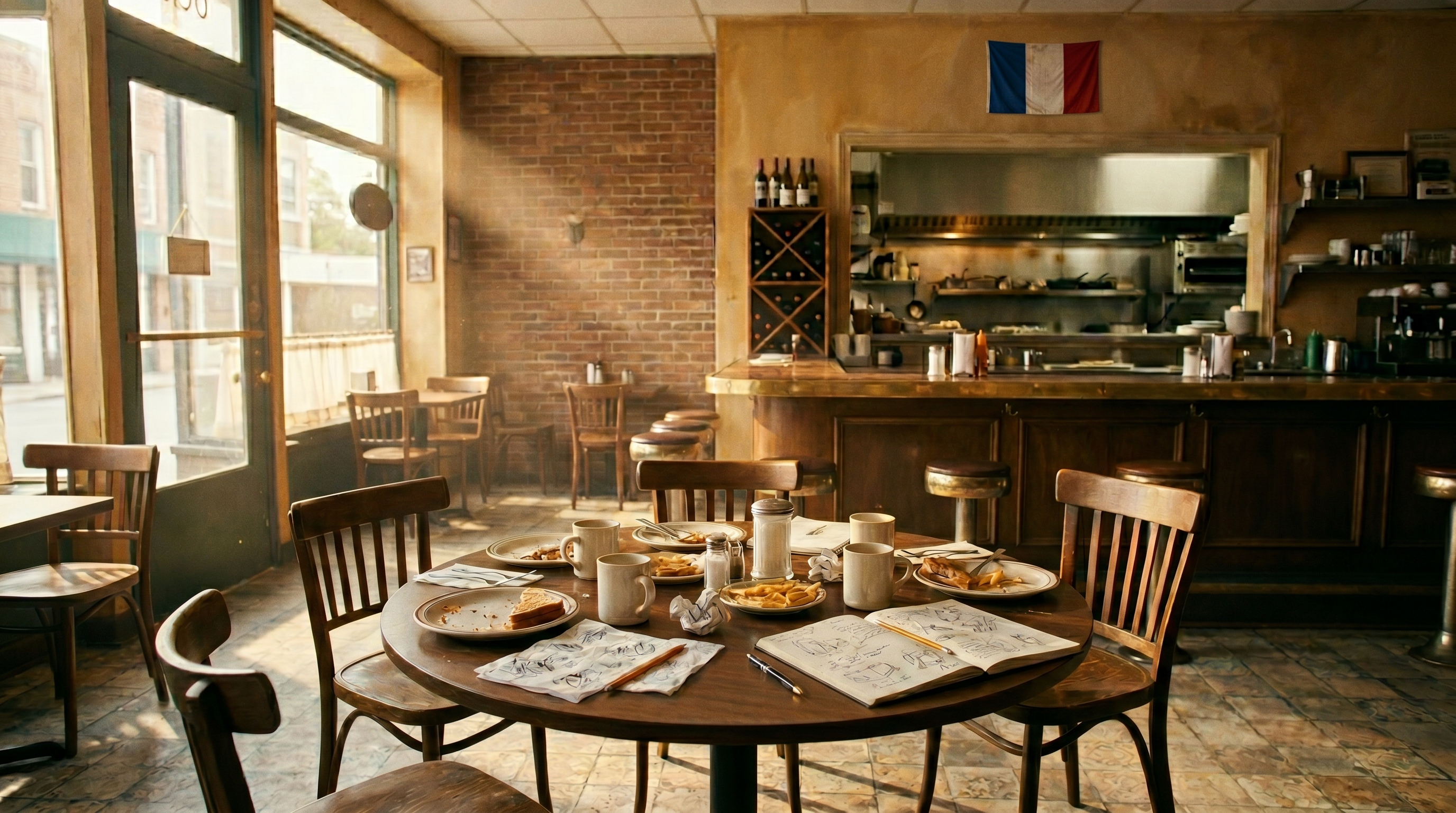
The table where four films were born
Roughly $4 billion in box office can be traced to that table. None of the four knew it at the time. They were trying to keep their jobs — Toy Story had nearly been killed by Disney eight months earlier and they were still racing to finish it. The lunch was, for them, just a Tuesday.
Bug, Fish, Monster, Robot. is a new play set inside that lunch. One room. Four men. Sixty minutes, one act, no intermission. The audience knows what comes next. They don't.
The Form
A 60-minute, one-act, no intermission. A chamber piece in the tradition of Matt & Ben, Amadeus, and The Shark Is Broken — a small group of people in a single room, with the audience holding a future the characters cannot see.
Producible at any budget. The cast is four (with an optional fifth as a server or as off-stage voices). The set is one table, one diner, one summer afternoon. A 99-seat house in Los Angeles or an Off-Broadway run in New York would be the natural first home.
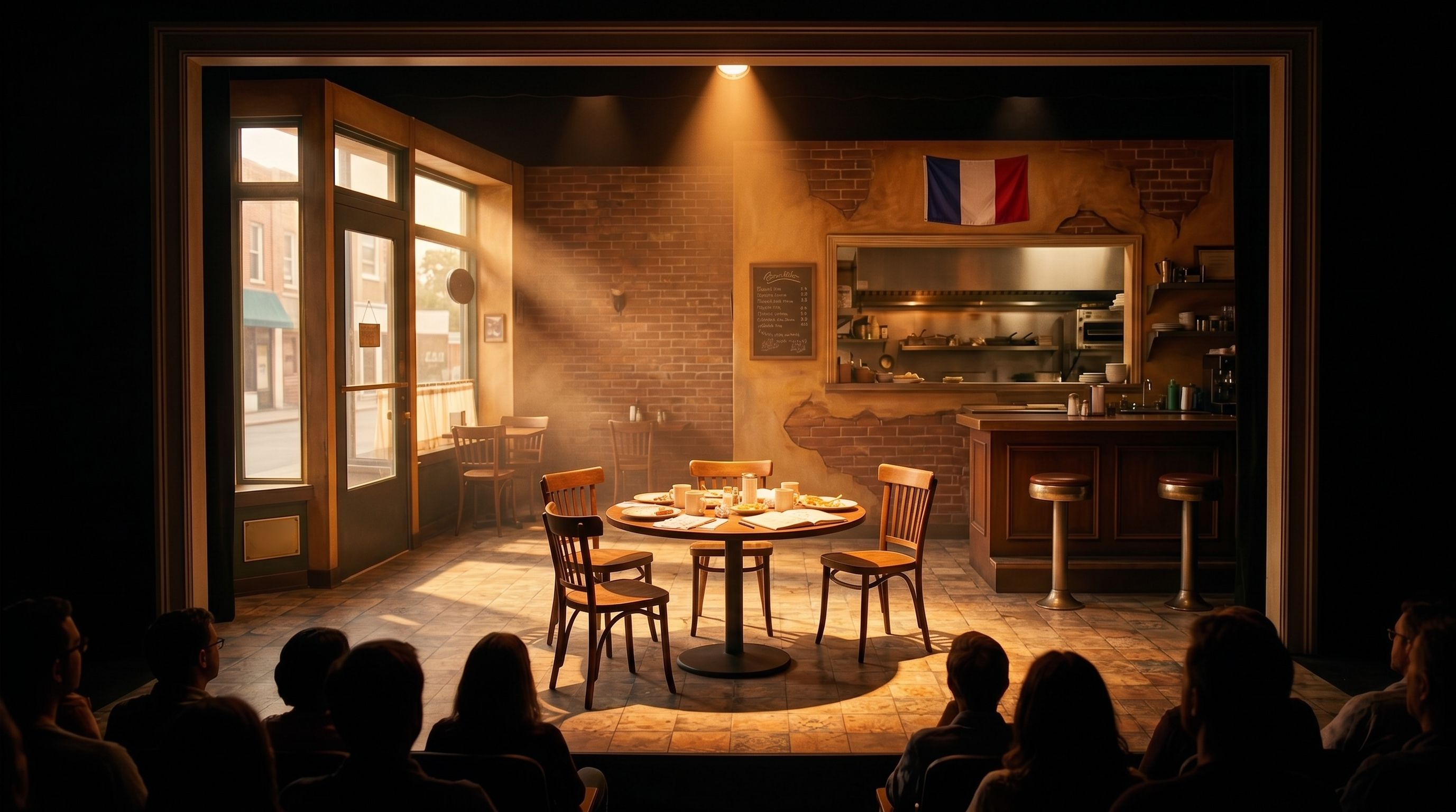
One table. Four chairs. The audience as the unspoken fifth seat at the lunch.
The Tone
Love letter, not exposé. Roughly 70% comic invention, 30% heart — played straight at the table, playful at the edges. The world of the café is porous to the ideas the four are dreaming up — an ant might cross the stage, a clownfish might appear in a tank, a kid at another table might talk about the monster in his closet. Easter eggs for the audience, invisible to the characters.
The dramatic irony lives in the audience, not in the dialogue. The play never foreshadows. It stays in 1994. The audience does the work.
The Why Now
Pixar is thirty years old. The lunch is folkloric inside the animation industry but largely unknown outside it. The principals are reaching the age at which their personal histories are being reckoned with — some heroically, some painfully. The play asks not only what the four of them built, but who else might have been in the room. The story is no longer too soon. It is, arguably, exactly on time.
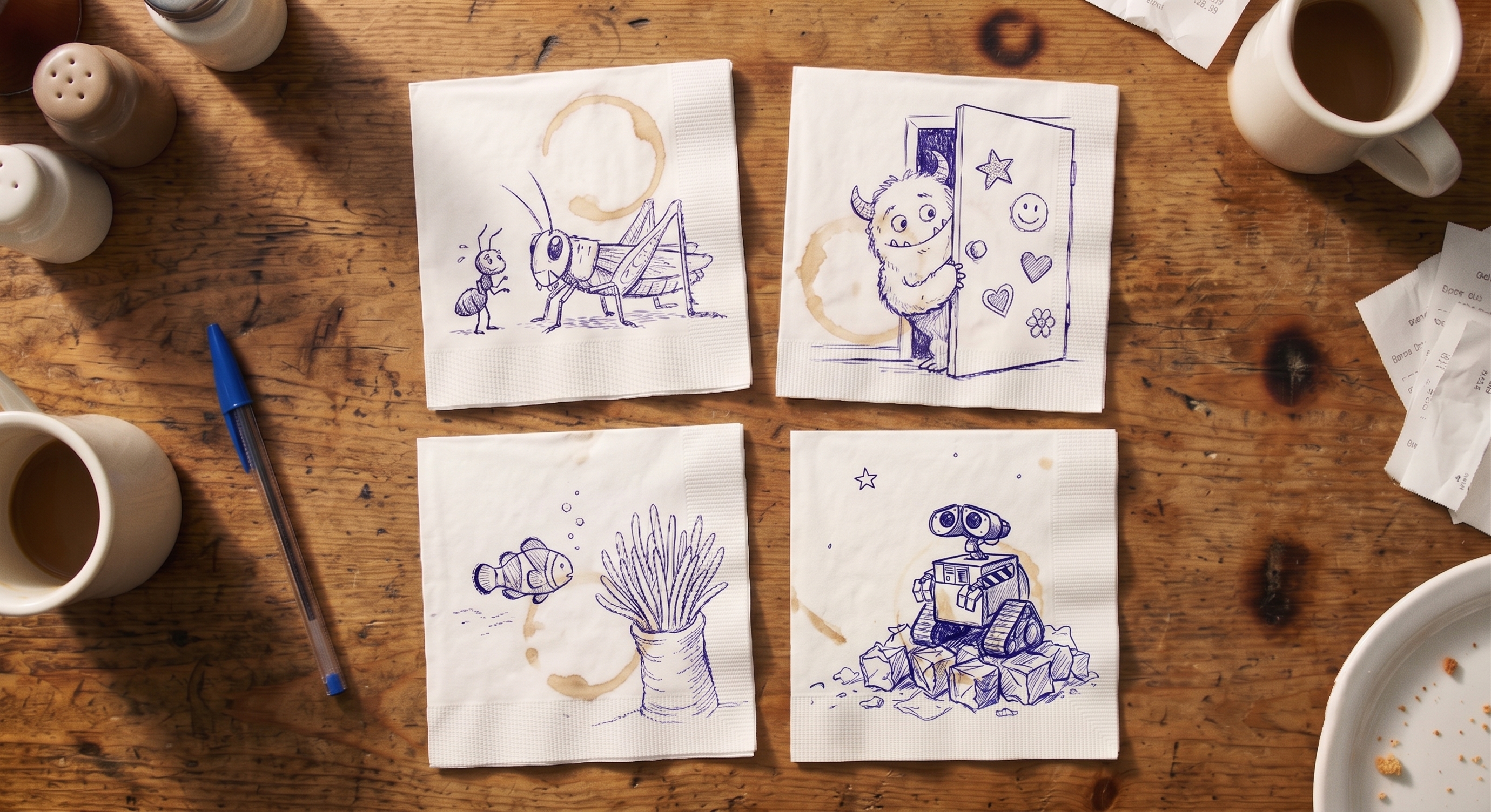
Napkin sketches — bug, fish, monster, robot
The Team
Scott Seibold — Creator. Senior Creative Producer and longtime documentary and brand storyteller. Producer of Not Just a Goof (Disney+, 100% Rotten Tomatoes, Annie Award nominee) under EP Don Hahn. Currently Senior Producer and Deputy Managing Editor at Improve the News Foundation.
Christopher Ninness — Developed with. His Disney+ collaboration with Scott on Not Just a Goof (100% Rotten Tomatoes, Annie Award nominee) now turns toward the stage. Animation-industry storyteller with deep relationships across the studio system.
The Research
The play is being developed from a deep base of primary-source research. The Research Dossier contains 25 pages of background on the meeting, the café, the four men, the surrounding moment, the Pixar story-room practices of the mid-90s, and the wider Disney/DreamWorks landscape of 1994. The Timeline maps the year around the lunch.